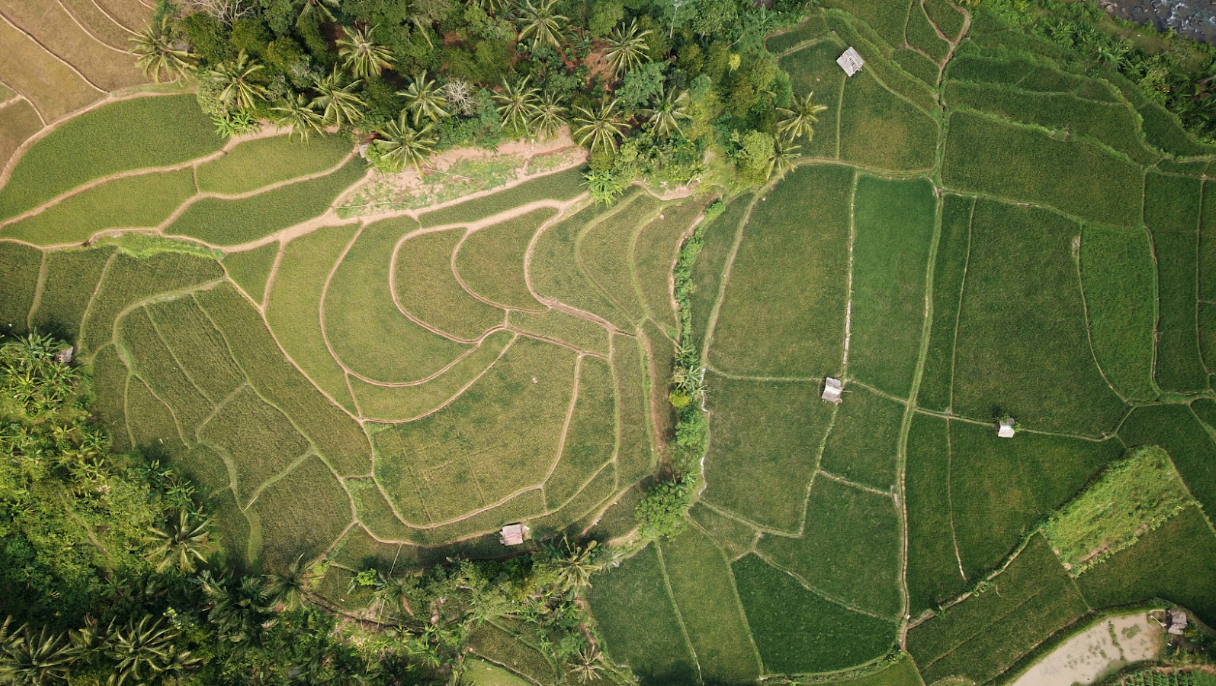


In Maori culture, land is referred to as treasure (taonga) that is passed down from generation to generation and needs to be taken care of. In many African countries, there is ubuntu, tying an individual's identity and well-being to their community and land. And for the Inuit people, there is sila, the interconnectedness between living beings and land.
The special bond between people and the land has been a universal experience. And while it has evolved significantly over time, it is no less important today. The UN estimates that agriculture supports the livelihoods of more than 2.5 billion people worldwide, and it remains the largest source of income and jobs for the rural poor.
However, land, along with its management, protection, and use, continues to be rife with intricate challenges, including contentious ownership rights, land grabbing, and the severe impacts of climate change. Up to 40% of the world's land is now considered degraded, a crisis the UN's desertification body says directly affects around half of humanity and touches everything from food security to biodiversity to water availability.
Can blockchain technology help tackle these problems and provide secure and transparent systems for land governance?
Secure property rights and efficient land registration are fundamental to a well-functioning society. Without them, it is difficult to determine who has the right to use or manage a piece of land, leading to fraud, corruption, and land grabbing, and often resulting in the loss of land rights for vulnerable communities as well as unsustainable practices.
Blockchain has the potential to form secure and transparent systems for land-use planning and land rights management. Its ability to create a tamper-proof and transparent record of transactions enables traceable recording of land ownership and its transfers. On top of that, blockchain-enabled smart contracts can automate the process of transferring land rights, reducing the need for intermediaries and minimizing the potential for fraud.
Clear, verifiable land rights let people take part in the formal economy and invest properly in the land they hold and steward. HouseAfrica, a Nigerian startup, set out to do exactly this, and has since grown into Sytemap, an early blockchain-based land registry that pairs an immutable ledger with a visual map reference to ease notorious problems like duplicate titles and illegal sales.
By 2026, the company reported facilitating roughly 1.5 billion naira (about 1.1 million US dollars) in property sales over 2025, signing up more than 20,000 users, over 70% of them women, and partnering exclusively with the Real Estate Developers Association of Nigeria to bring member estates onto a single mapped system. Rather than replacing the state registry, Sytemap sits upstream of it, adding a layer of verifiable inventory the official records lack.
Land purchase is both a powerful protection for biodiversity and an effective way to tackle climate change. Today, around 17.6% of the world's land and inland waters sit within protected or conserved areas, according to the 2024 Protected Planet Report.
The internationally agreed goal, known as 30x30 and set out in the Kunming-Montreal Global Biodiversity Framework in 2022, is to reach 30% by 2030, and some scientists argue we ultimately need closer to half to safeguard biodiversity. Either way, with land management and ownership often blurred, the obstacles are obvious, and land grabbing is a key one.
Tracking and reporting land use, blockchain can power databases that support sustainable, responsible land management as opposed to land grabbing and illegal use. Such a structure could also provide evidence to back the claims of local communities and Indigenous people and highlight sustainable administration.
Land stewardship, a centuries-old practice, can lean on tamper-proof records of protected areas and conservation efforts. Imagine being able to access the boundaries and characteristics of a protected area, including its size, location, and the ecosystems and species it hosts. From there, it becomes possible to monitor practices on the ground and reward them through token structures.
Regen Network remains a prime real-world example. It works with farmers, foresters, and other land stewards to collect and share data on their regenerative practices, from carbon sequestration to soil health to biodiversity, then records that data on-chain so outcomes can be verified and certified. In 2024, Regen partnered with Fundación Pachamama and the Sharamentsa community of Ecuador's Achuar Nation to launch Biocultural Jaguar Credits, a program combining satellite monitoring, community reporting on the ground, and blockchain verification to help protect 10,000 hectares of jaguar habitat in the Amazon while keeping stewardship and revenue in Indigenous hands.
What makes efforts like these credible is the data underneath them. Verifying what really happens on a piece of land used to be slow, expensive, and easy to fudge. Now satellite imagery, drones, soil sensors, bioacoustic recorders, and even environmental DNA feed digital monitoring, reporting, and verification (dMRV) systems that anchor their results on-chain, making ecological claims far harder to fake and cheaper to check.
Those jaguar credits are an early example of a fast-growing market: biodiversity, or nature, credits, which reward measurable gains in habitat and species rather than carbon alone. Demand has been driven by the 30x30 framework and by a wave of scrutiny over low-quality carbon offsets, both of which put a premium on outcomes you can prove. The market is young, and its standards are still being written, with groups like the Biodiversity Credit Alliance working on integrity principles.
Open Forest Protocol shows what this looks like in practice. It gives reforestation and conservation projects of any size, some as small as a fraction of a hectare, a free tool to record tree and forest data on-chain, where a distributed network of validators checks it. Projects across roughly 20 countries now use it, turning what used to be an unverifiable promise to plant trees into an open, auditable record.
Community land management brings diverse benefits, from improved land use and conservation to stronger social cohesion and cultural identity. It can also activate different forms of capital—human, social, and financial—and inspire a collective plan for where best to invest it.
Blockchain-enabled structures serve as community catalysts. Decentralized autonomous organizations (DAOs) facilitate open and democratic management. Both locally and globally, they mobilize sustainable communities, taking land, and decision-making over it, out of the hands of a select few. By participating, individuals become active agents in land restoration, regeneration, and conservation, with all stakeholders able to access up-to-date information and help manage and protect an area.
OASA is one of the pioneers in this area. It acquires land to remove it permanently from the speculative market and hold it in a perpetual trust, with a long-term goal of stewarding 100,000 hectares under regenerative care by 2050. To get there, it runs DAO governance and token-enabled economics on a hyperlocal scale, so every protected area keeps its own sovereignty.
Its 2025 constitution formalizes that model, and its Closer platform gives land-based communities a shared operating system for governance, membership, and finance. The flagship site, the Traditional Dream Factory, has tested the approach with more than 3,000 guests and over 280 token holders, a working example of handing sovereignty back to the communities doing the regenerative work on the ground.
The global population is projected to reach 9.7 billion by 2050, putting mounting pressure on limited land. Optimizing how we protect, manage, and use it will be crucial for sustaining both people and ecosystems for generations to come. Blockchain is not a silver bullet, but the tools here are maturing fast, and the projects building them, from Indigenous-led crediting pilots to open registries and community land trusts, will help shape where this goes next.
Support thoughtful, independent crypto journalism and help us continue highlighting blockchain’s potential for social and environmental impact.
cryptoaltruists.eth