

Nonprofits have always faced the same core challenges: high transaction fees that eat into donations, slow and expensive cross-border payments, opaque fund flows that frustrate donors, and growing pressure to prove that contributions actually made a difference. These aren't new problems, but the solutions are finally catching up.
Blockchain tools are beginning to address all of these pain points, giving organizations new ways to fundraise, pay, and demonstrate impact that are faster, cheaper, and more transparent than traditional systems. Whether it's accepting crypto donations, automating grant disbursements, or issuing verifiable impact credentials, Web3 infrastructure is opening doors that were previously closed to all but the largest, most well-resourced organizations.
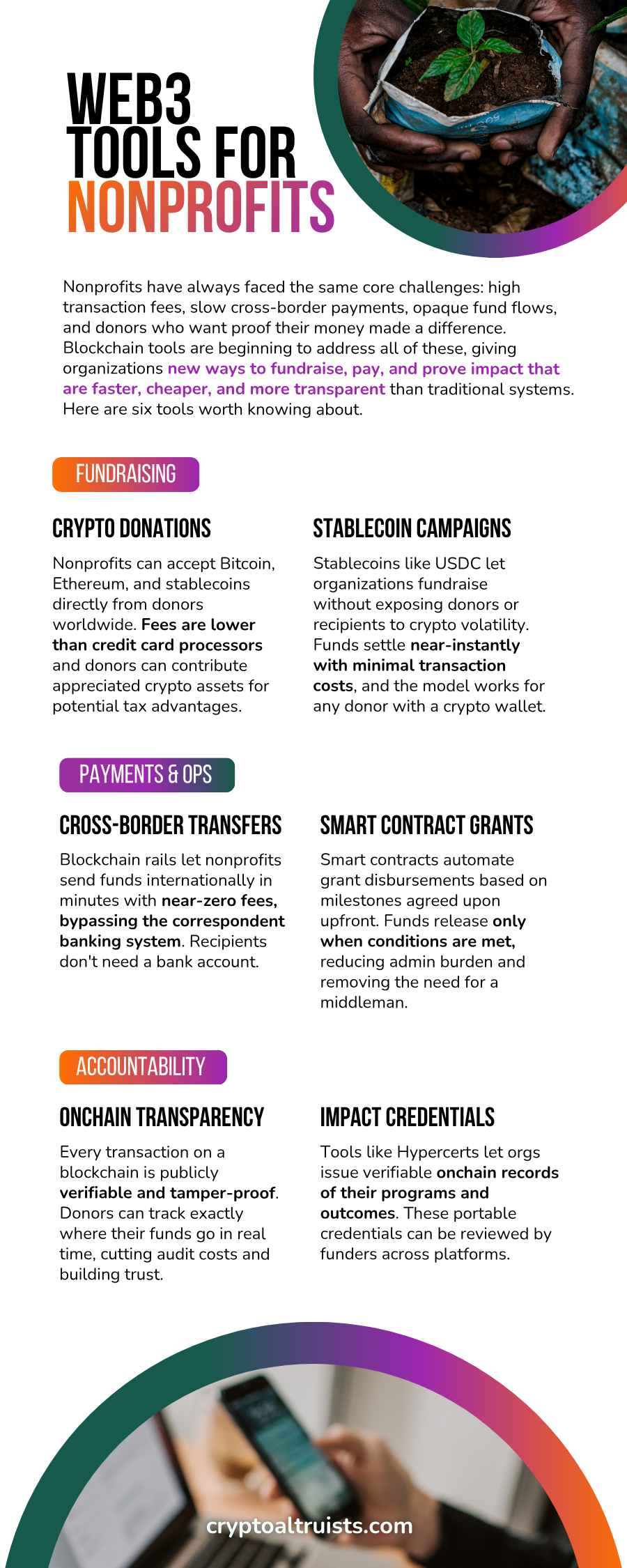
Here are six tools worth knowing about that are already being used by nonprofits around the world.
Nonprofits can now accept Bitcoin, Ethereum, stablecoins, and hundreds of other digital assets directly from donors anywhere in the world. Transaction fees are significantly lower than traditional credit card processors, often being under 1%, and settlements happen in minutes rather than days. For donors, contributing appreciated crypto assets can unlock potential tax advantages, including avoiding capital gains taxes while still claiming a charitable deduction. Platforms like Endaoment, Giveth, and The Giving Block have made it easy for organizations of any size to get started, handling custody, compliance, and conversion so nonprofits can receive funds in dollars if they prefer
Stablecoins like USDC and USDT offer the benefits of crypto, including fast settlement, low fees, and global reach, without exposing donors or recipients to price volatility. Because stablecoins are pegged to fiat currencies like the US dollar, their value stays consistent from the moment of donation to the moment of use. Funds settle near-instantly with minimal transaction costs, making stablecoins ideal for time-sensitive campaigns or international fundraising. Any donor with a crypto wallet can participate, and nonprofits can hold or convert funds as needed.
Sending funds internationally has long been one of the most frustrating aspects of global nonprofit work, with slow transfers, high fees, and unpredictable delays as the norm. Blockchain rails change that entirely. Nonprofits can now send funds to partners, grantees, or beneficiaries anywhere in the world in minutes, with near-zero fees, bypassing the correspondent banking system altogether. Recipients don't need a traditional bank account to receive funds, they just need a digital wallet, which can be set up on a smartphone in minutes. This is especially powerful in regions with limited banking infrastructure or where local currency instability makes holding cash risky.
Smart contracts are programmable agreements that live on a blockchain and execute automatically when predefined conditions are met. For nonprofits and funders, this means grant disbursements can be tied directly to milestones agreed upon upfront, with funds released only when deliverables are verified, reducing administrative burden and removing the need for manual approval or third-party oversight. The result is faster funding cycles, lower overhead, and greater confidence for both grantmakers and grantees that resources are being deployed as intended.
Every transaction recorded on a blockchain is publicly verifiable, timestamped, and tamper-proof. For nonprofits, this creates an unprecedented level of transparency: donors can track exactly where their funds go in real time, from the moment of contribution to final disbursement. This visibility reduces audit costs, simplifies reporting, and builds trust with supporters who want proof their money made a difference. For organizations operating in complex or high-risk environments, onchain records also provide a durable paper trail that can withstand scrutiny from regulators, funders, or the public.
Proving impact has always been one of the hardest parts of nonprofit work. Outcomes are difficult to measure, reports are time-consuming to produce, and data often lives in siloed systems that funders can't access. Tools like Ethereum Attestation Service, Hypercerts, and Karma are changing that by allowing organizations to issue verifiable, onchain records of their programs and outcomes. These portable credentials can be reviewed by funders across platforms, making it easier to demonstrate track record, attract new funding, and build credibility over time. Think of it as a verified resume for impact that's transparent, interoperable, and difficult to fake.
These six tools are just the beginning. As blockchain infrastructure matures and adoption grows, nonprofits will have access to an expanding toolkit for fundraising, operations, and accountability; one that's faster, cheaper, and more transparent than anything that came before.
The organizations exploring these tools today are positioning themselves to move faster, reach more people, and build deeper trust with donors and funders. The learning curve is real, but the barriers to entry are lower than ever.
If you're ready to go deeper, our Web3 Impact Toolkit is designed to help. It's a practical, hands-on resource for nonprofit leaders who want to understand what's possible with blockchain, and tangible advice on how to get started. Explore the toolkit and take the next step.
Support thoughtful, independent crypto journalism and help us continue highlighting blockchain’s potential for social and environmental impact.
cryptoaltruists.eth