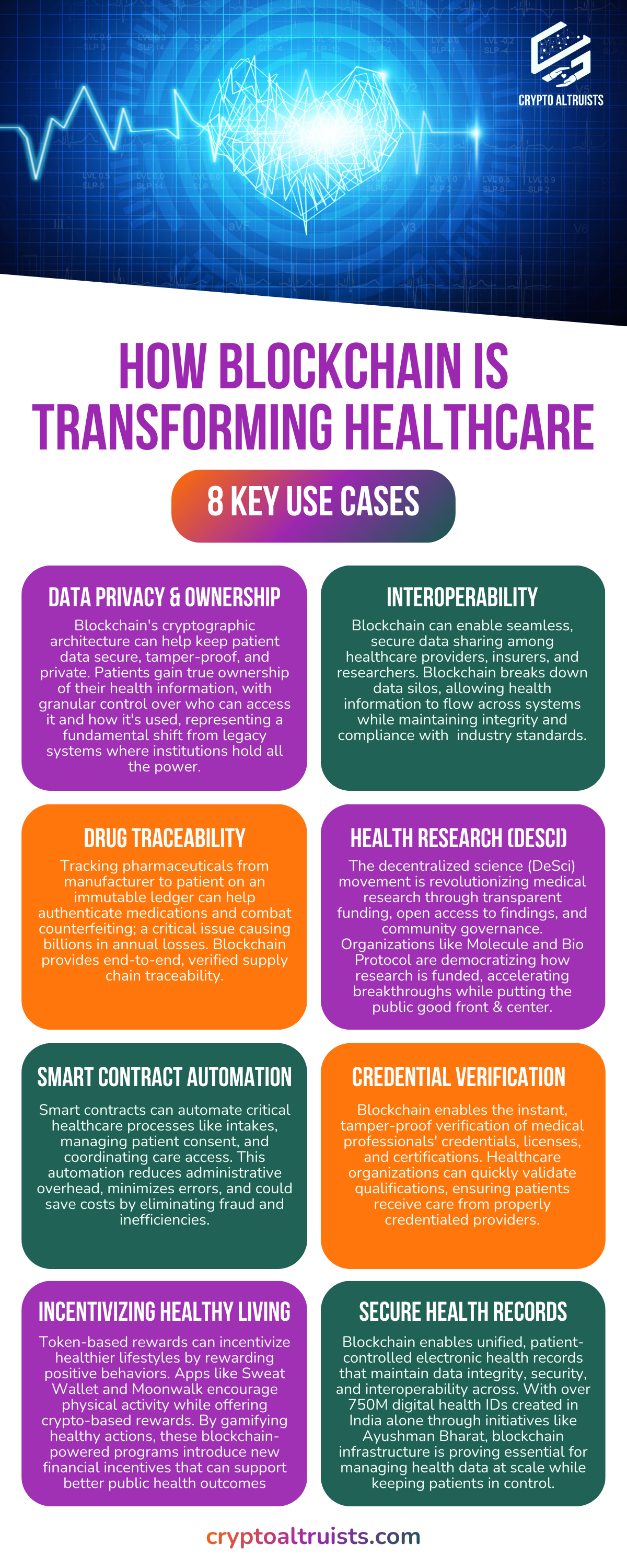


Blockchain technology is transforming healthcare by empowering patients with control over their data, strengthening trust across the system, and improving quality of care. With the global blockchain healthcare market projected to reach $750 billion by 2033, here's how this technology is making an impact:
Blockchain's cryptographic architecture can help keep patient data secure, tamper-proof, and private. Patients gain true ownership of their health information, with granular control over who can access it and how it's used, representing a fundamental shift from legacy systems where institutions hold all the power.
Blockchain can enable seamless, secure data sharing among healthcare providers, insurers, and researchers. Blockchain breaks down data silos, allowing health information to flow across systems while maintaining integrity and compliance with industry standards.
Tracking pharmaceuticals from manufacturer to patient on an immutable ledger can help authenticate medications and combat counterfeiting; a critical issue causing billions in annual losses. Blockchain provides end-to-end, verified supply chain traceability.
The decentralized science (DeSci) movement is revolutionizing medical research through transparent funding, open access to findings, and community governance. Organizations like Molecule and Bio Protocol are democratizing how research is funded, accelerating breakthroughs while putting the public good front & center.
Smart contracts can automate critical healthcare processes like intakes, managing patient consent, and coordinating care access. This automation reduces administrative overhead, minimizes errors, and could save costs by eliminating fraud and inefficiencies.
Blockchain enables the instant, tamper-proof verification of medical professionals' credentials, licenses, and certifications. Healthcare organizations can quickly validate qualifications, ensuring patients receive care from properly credentialed providers.
Token-based rewards can incentivize healthier lifestyles by rewarding positive behaviors. Apps like Sweat Wallet and Moonwalk encourage physical activity while offering crypto-based rewards. By gamifying healthy actions, these blockchain-powered programs introduce new financial incentives that can support better public health outcomes
Blockchain enables unified, patient-controlled electronic health records that maintain data integrity, security, and interoperability across. With over 750M digital health IDs created in India alone through initiatives like Ayushman Bharat, blockchain infrastructure is proving essential for managing health data at scale while keeping patients in control.
Support thoughtful, independent crypto journalism and help us continue highlighting blockchain’s potential for social and environmental impact.
cryptoaltruists.eth