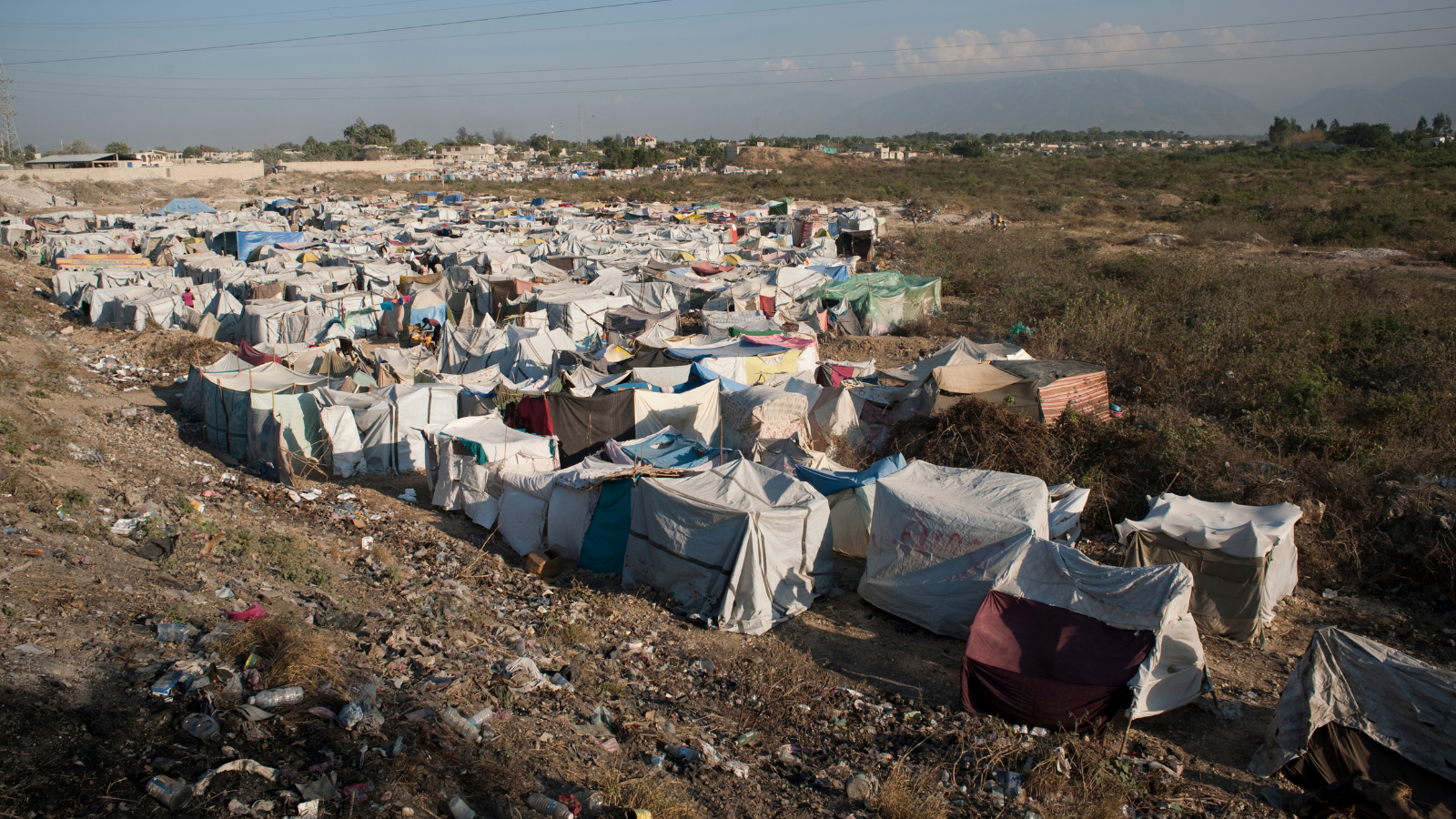


In recent years, the world has witnessed an unsettling increase in the frequency and intensity of both natural and man-made disasters. From devastating earthquakes and floods to armed conflicts and displacement crises, the spectrum of disasters continues to broaden. Climate change, geopolitical tensions, and conflict are among the myriad factors contributing to this trend that is affecting hundreds of millions of lives, disrupting ecosystems, and causing monumental economic losses.
As communities across the globe grapple with these escalating threats, the urgency for robust, transparent, and efficient disaster response mechanisms has never been more apparent. What’s remarkable is that blockchain technology and cryptocurrency are no longer theoretical solutions for humanitarian aid. In fact, they are being deployed right now, in active crises, changing how aid reaches the people who need it most, and proving that blockchain has value in the most challenging environments on Earth.
One of the most significant and well-known deployments of blockchain in humanitarian aid is the partnership between the United Nations High Commissioner for Refugees (UNHCR) and the Stellar Development Foundation. Launched in December 2022, this first-of-its-kind program delivers cash assistance to displaced Ukrainians via USDC stablecoin directly to their smartphones.
Once the UNHCR confirms eligibility, assistance is distributed in Circle’s USD, a stablecoin pegged 1:1 to the US dollar, directly into recipients’ digital wallets. Recipients can then visit any of the 4,500+ MoneyGram locations across Ukraine to exchange their USDC for euros, dollars, or Ukrainian hryvnia.
This program has several key benefits. First, there is no bank account required; recipients don’t need traditional banking access, just a smartphone Second, the funds are portable and refugees can safely transport funds digitally without carrying cash Third, the program was highly fast and efficient, with funds reaching recipients in minutes rather than days. Finally, the funds are fully traceable, with every transaction recorded on the blockchain for accountability
As Denelle Dixon, CEO of the Stellar Development Foundation, noted:
“SDF, together with UNHCR, is realizing the promise of blockchain and pioneering a new future for the delivery of billions of dollars in aid disbursed annually”
The pilot began in Kyiv, Lviv, and Vinnytsia and has since expanded to reach more war-affected people throughout Ukraine.
When a devastating 7.8 magnitude earthquake struck Turkey and Syria on February 6, 2023, killing thousands and displacing hundreds of thousands more, the crypto community mobilized at unprecedented speed.
Within 48 hours of the disaster, over $11 million in cryptocurrency donations had poured in from around the world. The response demonstrated crypto’s unique ability to bypass bureaucratic delays and get funds moving immediately, with major contributions from:
Binance: pledged $5 million and airdropped $100 in BNB to users in earthquake-affected regions.
Vitalik Buterin: donated approximately $227,000 in ETH to Turkish relief organizations including Ahbap and Anka Relief.
Avalanche Foundation: donated $1 million in AVAX tokens to disaster relief efforts, organized by Haluk Levent
Ripple: provided $1 million in XRP distributed among CARE, World Central Kitchen, Mercy Corps, and the International Rescue Committee
The crisis also highlighted the significance of regulatory challenges. Although crypto donations are technically restricted in Turkey, authorities made an exception, with the Financial Crimes Investigation Board (MASAK) approving three crypto wallets for the Turkish nonprofit AHBAP, which received over $3 million within seven days.
For Syria, which faces heavy international sanctions, crypto provided a crucial lifeline. The US Treasury’s OFAC quickly issued General License 23, authorizing digital payments for earthquake relief; explicitly confirming that cryptocurrency could be used for humanitarian assistance.
With 97% of Afghanistan’s population living under the poverty line and a collapsed banking sector following the 2021 regime change, traditional aid delivery became nearly impossible.
Enter HesabPay, a blockchain-based payment platform that has become a lifeline for millions. Founded in 2016 and migrated to the Algorand blockchain in 2022, HesabPay has facilitated millions of transactions, while onboarding thousands of users and merchants, and even enabling the payment of more than $4M in electricity bills monthly.
HesabPay issues digital Afghani (Afn) based on fiat deposits, settled on the Algorand blockchain. Users can access the platform via smartphone apps (iOS and Android), feature phones via USSD, or QR code cards, and local HesabPay offices across all 34 provinces enable on-ramp and off-ramp to local currency. On the funder side, humanitarian organizations like the World Food Programme send funds directly to beneficiaries.
A study by the London School of Economics tracking 2,500 women using HesabPay found remarkable results: families experienced fewer skipped meals, and an impressive 98% of assistance was spent digitally with local merchants. This demonstrates the seamless integration into local economies, which has long been a pain-point for crypto projects in last-mile communities.
In 2024, the Algorand Foundation led a coalition including Circle, Worldpay, Mercy Corps Ventures, UNDP, and HesabPay to form a Humanitarian Council seeking to scale blockchain-based cash assistance globally.
As Matt Keller, Director of Impact at Algorand Foundation, noted: “Blockchain checks all of these boxes, and one reason we invested in HesabPay, which delivers humanitarian aid payments in Afghanistan without sacrificing time or accountability.”
Perhaps no example illustrates blockchain’s potential for humanitarian and democratic purposes more dramatically than Myanmar’s National Unity Government (NUG), the shadow government representing the ousted civilian administration.
Following the military coup in February 2021, the NUG turned to blockchain technology to create an entire parallel financial system outside the junta’s control, with two core components:
Digital Myanmar Kyat (DMMK): In mid-2022, the NUG tokenized the Myanmar Kyat and issued it as a cryptocurrency on the Stellar blockchain. Pegged 1:1 to the Kyat’s black market rate and accessible through the NUGPay mobile wallet, DMMK enables citizens and diaspora to send funds, pay taxes, and support the resistance without using junta-controlled banks. As of March 2025, DMMK transactions totaled 2.3 trillion Kyat (approximately $500 million).
Spring Development Bank (SDB): In July 2023, the NUG launched Myanmar’s first financial institution to operate solely with crypto and blockchain technology. The bank supports transactions in multiple currencies and uses stablecoins to minimize exchange risk. In November 2025, the SDB token was listed on MEXC exchange, with its market capitalization growing from $500 million to $724.7 million in just six days.
According to the NUG, SDB funding has allowed them to support the resistance with nearly $30 million, demonstrating how blockchain can serve as critical infrastructure for democratic movements under authoritarian pressure.
When a 7.7 magnitude earthquake struck Myanmar in March 2025, the NUGPay system became essential for channeling humanitarian aid to affected areas, particularly in regions blocked by the junta from receiving traditional assistance.
With banking infrastructure devastated by conflict and severe restrictions on cash entering Gaza, cryptocurrency has become a crucial workaround for delivering humanitarian assistance, with grassroots initiatives raising millions in crypto donations.
One campaign led by the pseudonymous trader Loopify has raised over $2.1 million in cryptocurrency for Gaza since 2024, with 946 donors contributing an average of $1,445 each.
Major humanitarian organizations have also embraced crypto donations for Gaza relief, with the International Rescue Committee (IRC) receiving over $20,000 in crypto donations in a single campaign in May 2024 with support from ENS (Ethereum Name Service); and large NGOs like UNRWA, Oxfam, and CARE accepting donations in cryptocurrency to support work in Gaza.
For individuals inside Gaza, cryptocurrency enables them to receive funds from family and friends abroad when traditional channels have failed. As one aid worker explained: “Without the cryptocurrency platforms, we wouldn’t be able to do this campaign and receive funds”.
Unfortunately, many traditional funding platforms have restricted transfers to Gaza, but there are still many ways to donate with crypto. We recommend watching this video by Josh of the Blockchain Socialist on how to send cryptocurrency to Gaza. Check out our recent podcast episode where we spoke with Josh about how he has helped the community donate to Gaza for over a year.
Perhaps the most innovative application of blockchain in humanitarian aid is anticipatory action, a relatively new model in humanitarian aid that uses predictive analytics and smart contracts to deliver aid before disasters occur, rather than reacting afterward.
This approach can be highly beneficial not only in terms of cost efficiency, but more importantly, in lives saved. For example, research shows that anticipatory action is seven times more cost-effective than traditional humanitarian aid, while early warning systems activated 24 hours before a disaster can save lives and reduce damage by up to 30%.
Mercy Corps Ventures has been a leader in the space and supported several blockchain-based anticipatory action pilots:
Kenya (Horn of Africa): In partnership with Fortune Credit, Shamba Network, and DIVA Technologies, Mercy Corps Ventures tested blockchain-powered smart contracts to deliver anticipatory cash transfers to pastoralist communities facing drought. The results were dramatic, with a 75% reduction in transfer costs , 90% reduction in time to deliver funds (from 7-10 days to just 14.5 hours), and 53% of participants reporting improved ability to meet major unexpected expenses
Nepal: Mercy Corps Ventures, Mercy Corps Nepal, and Rumsan launched an anticipatory action pilot using the Rahat platform integrated with Stellar’s Disbursement Platform and Soroban smart contracts. The system uses forecast data to automatically trigger the release of tokens and risk communications to flood-prone communities before disaster strikes.
Scaling with Ripple: Building on these successes, Mercy Corps Ventures is collaborating with Ripple to expand anticipatory cash transfers using Ripple’s RLUSD stablecoin. This shows that anticipatory action is starting to get institutional buy-in, and that the technology can be a gamechanger in humanitarian aid and disaster relief at scale.
In 2025, Mercy Corps Ventures launched the world’s first Anticipatory Action Accelerator, offering grants up to $100,000 to organizations piloting solutions that leverage climate data analytics, AI/ML, and crypto payment rails to transform humanitarian aid delivery.
If you’re looking to dive deeper into this exciting work, check out our blockchain and anticipatory action infographic, or listen to our chat with Sandra Uwantege Hart of Mercy Corps Ventures, where we discussed how Web3 & AI enable anticipatory action at scale.

Beyond these specific case studies, crypto philanthropy has become a major force in disaster response, and charitable giving more broadly. In fact, The Giving Block, a leading crypto philanthropy platform, projects there will be $10 billion in crypto donations over the next decade.
The Ukraine response in 2022 set a powerful precedent, demonstrating the ability of the crypto community to organize swiftly. Following Russia’s invasion, the Ukrainian Government posted wallet addresses directly to Twitter, receiving over $100 million in cryptocurrency donations within months, representing the first time a sovereign government had appealed directly to the crypto community for humanitarian support. In total, an estimated $212M in crypto has been donated to Pro-Ukraine causes.
Crypto philanthropy is still in its infancy, with most nonprofits (especially smaller ones) not yet accepting crypto donations. However, this is changing quickly as more examples emerge showing the power of crypto to fund charitable causes.
The future of blockchain in disaster response is no longer theoretical. From UNHCR’s stablecoin distributions to Ukrainian refugees, to Afghanistan’s blockchain-powered payment system reaching women in the most remote provinces, to Myanmar’s democratic movement building parallel financial infrastructure to resist authoritarianism, blockchain is proving its value where it matters most.
These aren’t pilot projects in controlled environments. They’re deployments in active conflict zones, collapsed banking systems, and regions under severe sanctions, precisely the environments where traditional aid delivery struggles most.
The technology’s decentralized, transparent, and borderless nature makes it uniquely suited for humanitarian work. By enabling direct aid delivery without intermediaries, providing instant global transfers, creating automated trigger-based disbursements, and maintaining transparent audit trails, blockchain is addressing long-standing challenges in disaster response.
That being said, many challenges still remain, including scalability, integration with existing systems, regulatory frameworks, and ensuring recipients can convert digital assets to useful goods and services. But the evidence from these real-world deployments is clear: blockchain and cryptocurrency are becoming essential tools in the humanitarian toolkit.
The question is no longer whether blockchain can support disaster relief, but how quickly we can scale proven solutions to reach the hundreds of millions who need them most.
Support thoughtful, independent crypto journalism and help us continue highlighting blockchain’s potential for social and environmental impact.
cryptoaltruists.eth