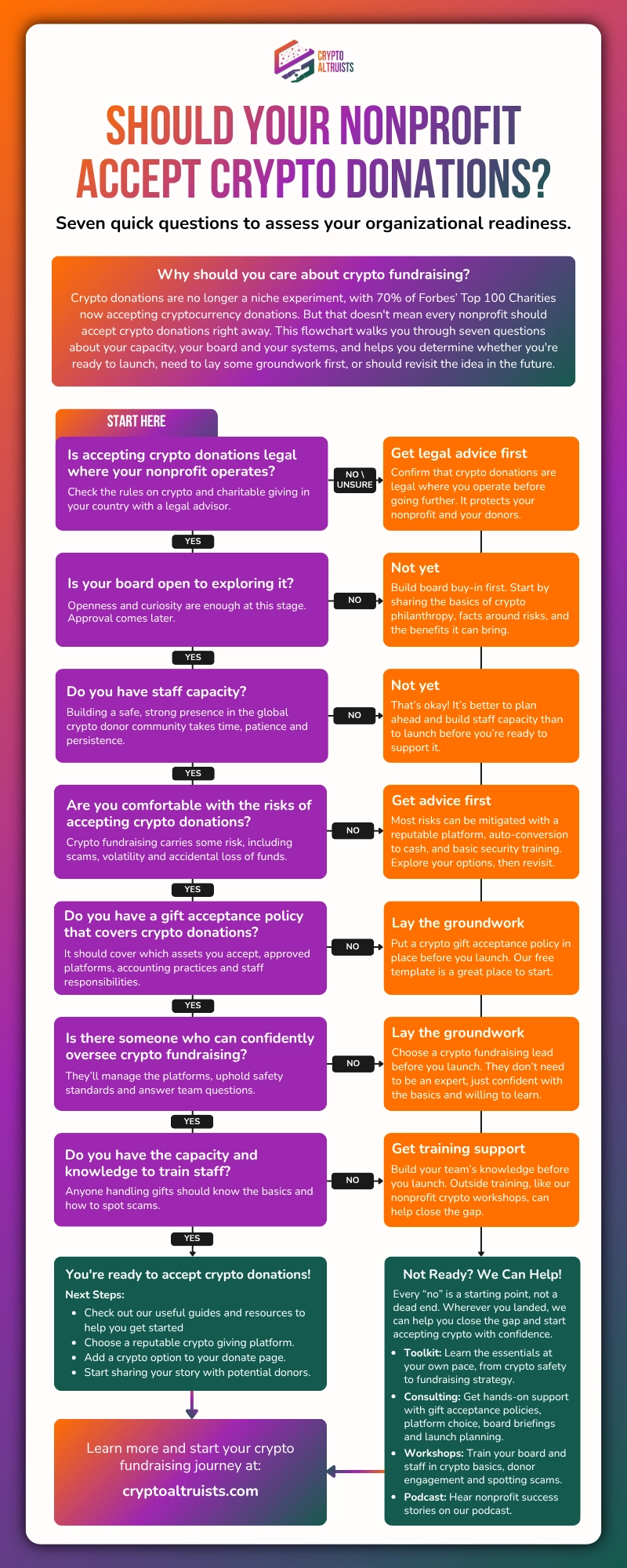


Crypto donations are no longer a niche experiment, with 70% of Forbes' Top 100 Charities now accepting cryptocurrency donations. But that doesn't mean every nonprofit should accept crypto donations right away. This flowchart walks you through seven questions about your capacity, your board and your systems, and helps you determine whether you're ready to launch, need to lay some groundwork first, or should revisit the idea in the future.
1. Is accepting crypto donations legal where your nonprofit operates?
Crypto rules vary widely from country to country, and some places restrict cryptocurrency or how charities can receive it. Check the rules on crypto and charitable giving with a legal advisor before going any further. If you're unsure, treat the answer as no for now and get legal advice first.
2. Is your board open to exploring it?
You don't need approval yet, just openness and curiosity. If your board isn't there yet, build buy-in first by sharing the basics of crypto philanthropy, the facts about the risks, and the benefits it can bring.
3. Do you have staff capacity?
Building a safe, strong presence in the global crypto donor community takes time, patience and persistence. If your team is already stretched, it's better to plan ahead and build capacity than to launch before you're ready to support it.
4. Are you comfortable with the risks of accepting crypto donations?
Crypto fundraising carries some risk, including scams, volatility and accidental loss of funds. Most of these can be reduced with a reputable giving platform, automatic conversion to cash, and basic security training. If you're not comfortable yet, explore those options and get advice before revisiting.
5. Do you have a gift acceptance policy that covers crypto donations?
Your policy should cover which assets you accept, which platforms you use, your accounting practices and staff responsibilities. It protects your organization and reassures your board. If you don't have one yet, our free template is a great place to start.
6. Is there someone who can confidently oversee crypto fundraising?
Crypto fundraising works best with a clear lead who manages the platforms, upholds safety standards and answers team questions. They don't need to be an expert, just confident with the basics and willing to learn.
7. Do you have the capacity and knowledge to train staff?
Everyone who handles gifts, from fundraising to finance, should know the basics of how crypto donations work and how to spot scams. If that knowledge isn't in-house yet, outside training such as our nonprofit crypto workshops can help close the gap.
You're ready to accept crypto donations.
If you answered yes to all seven questions, it's time to launch. Check out our guides and resources to help you get started, choose a reputable crypto giving platform, add a crypto option to your donate page, and start sharing your story with potential donors.
Not ready yet, or not sure?
Every "no" is a starting point, not a dead end. Each outcome in the flowchart points to your next step, whether that's getting legal advice, building board buy-in, growing staff capacity, managing risk, putting a gift acceptance policy in place, choosing a crypto fundraising lead, or training your team.
Wherever you landed, we can help you close the gap and start accepting crypto with confidence.
Do we have to hold cryptocurrency to accept crypto donations?
No. Most crypto giving platforms enable the conversion of donations to cash automatically, so the gift lands in your bank account in your local currency.
Are crypto donations tax-deductible for donors?
Often, yes, but the rules depend on the country. Some countries treat cryptocurrency, where others treat it like property, with different rules around donations for each. Donors and nonprofits should do their own research, consult with their team, and check with a tax advisor.
How long does it take to start accepting crypto donations?
Technical setup through a giving platform can be quick. Board approval and a gift acceptance policy usually take longer, which is why it's worth starting before giving season.
Is it legal for nonprofits to accept crypto donations?
In many countries, yes, but the rules vary, and some countries restrict cryptocurrency or how charities can receive it. Check with a legal advisor in your jurisdiction before accepting crypto gifts.
Support thoughtful, independent crypto journalism and help us continue highlighting blockchain’s potential for social and environmental impact.
cryptoaltruists.eth