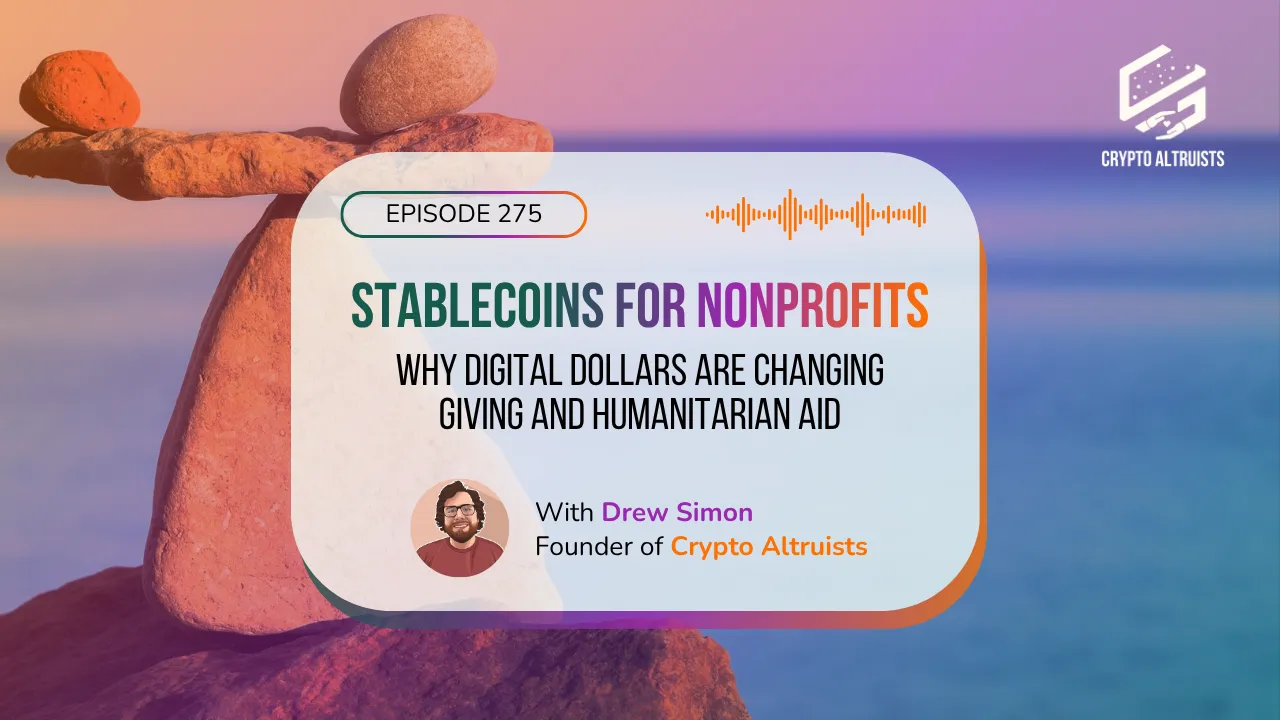


For episode 275 of the Crypto Altruists podcast, Drew takes a solo deep dive into stablecoin donations for nonprofits, humanitarian aid, and why digital dollars are quietly becoming one of the most practical tools crypto has to offer the impact sector.
When most people hear “crypto,” they think of volatility, and for nonprofits, that volatility is a real concern. Stablecoins are designed to do the opposite. Pegged one-to-one to currencies like the US dollar, they combine the speed and global reach of crypto with a steady, predictable value. And they’re growing fast: The Giving Block reported more than $100 million in crypto donations in 2025, with over $32 million arriving in stablecoins like USDC, USDT, and DAI.
In this episode, Drew makes the case for stablecoins in two ways: as an easier way for nonprofits to receive donations, and as a faster, cheaper way to move money to the partners and communities who need it most. Drawing on clips from past guests, including Endaoment, Pesabase, All In For Sport, HesabPay and the Algorand Foundation, Elliptic, and more, we explore how stablecoins’ stability, global reach, low cost, speed, and transparency are being put to work, from crypto giving season to humanitarian aid in South Sudan, Afghanistan, Somaliland, and Myanmar. We also look at why the UN’s largest aid agencies are now testing stablecoin payments, take an honest look at the risks, and share practical steps any nonprofit can take to get started safely.
In today’s discussion you’ll learn:
💵 Why stablecoin donations are one of the fastest-growing trends in crypto philanthropy, and what makes them different from other crypto gifts
🌍 How stablecoins are moving money across borders faster and cheaper than traditional banking, in places like South Sudan, Afghanistan, and Somaliland
🏛️ Why the UN’s largest aid agencies are now testing stablecoin payments for humanitarian aid
🧭 Practical steps nonprofits can take to start accepting and using stablecoins, safely and responsibly
💵 Stablecoins make crypto practical for nonprofits: Formany nonprofits, volatility is the biggest barrier to accepting crypto.Stablecoins remove it. Because they’re designed to hold a steady value, usuallypegged one-to-one to the US dollar, a gift is worth the same when you’re readyto use it as it was when it arrived. With 30% of crypto donations arriving inthe final quarter of the year, stablecoins deserve a place in every nonprofit’sgiving season conversation, especially for boards that have been wary ofcrypto’s price swings.
🌍 Stability, reach, low cost, speed, and transparencymake stablecoins powerful humanitarian rails: The same qualities that makestablecoins great for receiving donations make them powerful for getting helpwhere it’s needed most. Sending money across borders is still expensive, and stablecoinscan cut those costs dramatically and move money in minutes rather than weeks. Organizationsare already using stablecoins to reach people the traditional financial systemleaves behind, and the world’s biggest humanitarian institutions are takingnotice. This includes the World Food Programme plans to test stablecoin paymentcorridors over the next three years, the UNDPs Digital Asset Innovation Pool, andmore.
🧭 Start thoughtfully, with the right safeguards inplace: Stablecoins aren’t a magic solution, and they come with real risksthat nonprofits need to understand. Not all stablecoins are backed by the samequality of reserves, and their usefulness depends on whether recipients canactually cash out locally. Regulation also varies widely by country, and publicblockchains can expose sensitive information if programs aren’t designedcarefully. The good news is that getting started doesn’t have to becomplicated. Begin with a clear gift acceptance policy, use a trusted platform,stick to major regulated stablecoins, secure your custody setup, involve youraccountant early, start small with international payments, and train your teamto spot scams.
02:15 - What are stablecoins?
03:45 - Why stablecoin donations are growing.
06:30 - Five reasons stablecoins work for nonprofits
14:20 - Stablecoins as humanitarian rails
26:20 - The honest risks of stablecoins
28:35 - Practical tips for how nonprofits can start accepting stablecoin donations
Support thoughtful, independent crypto journalism and help us continue highlighting blockchain’s potential for social and environmental impact.
cryptoaltruists.eth
While we may discuss specific web3 projects or cryptocurrencies on this podcast, please do not take any of this as investment advice, and please make sure to do your own research on potential investment opportunities, or any opportunity. We host a variety of guests on this podcast with the sole purpose of highlighting the social impact use cases of this technology. That being said, Crypto Altruism does not endorse any of these projects, and we recognize that, since this is an emerging sector, some may be operating in regulatory grey areas, and as such, we cannot confirm their legality in the jurisdictions in which they operate, especially as it pertains to decentralized finance protocols. So, before getting involved with any project, it’s important that you do your own research and confirm the legality of the project. More available HERE.